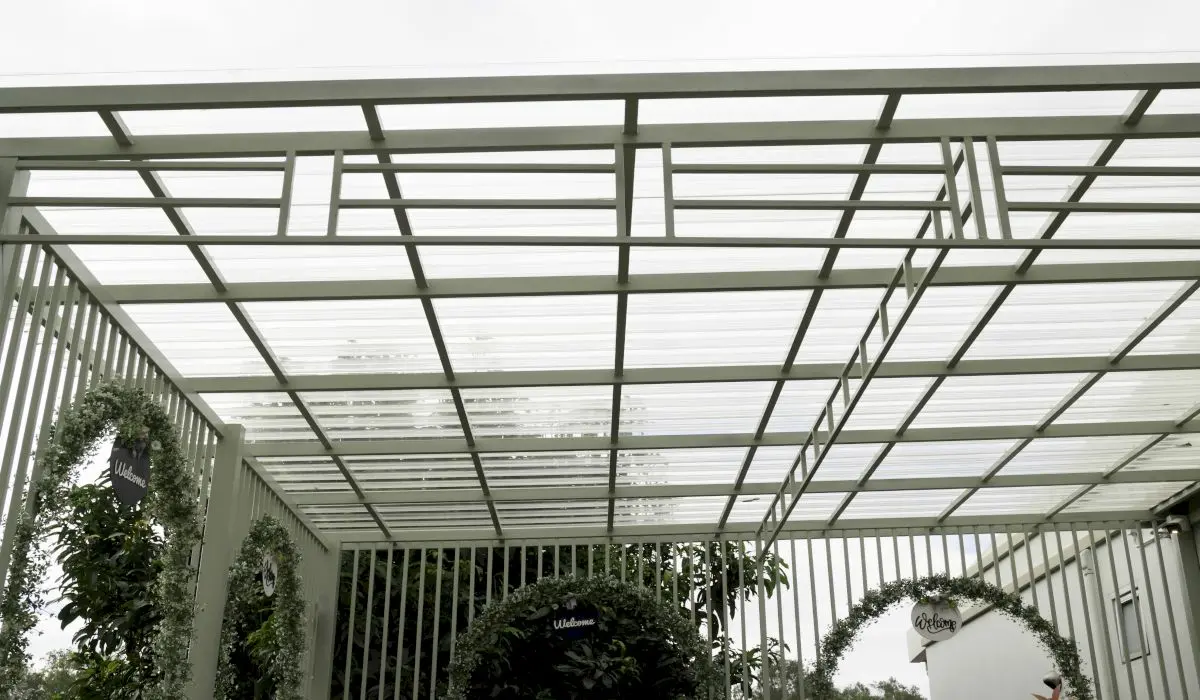
The resistance of polycarbonate to hail and snow proves itself over time, when the covering remains intact after storms, frost, and repeated snow loads. In reality, thickness is important, but it is not the only factor.
The type of sheet, the structure it is mounted on, and the roof slope also matter. An entrance canopy, a carport, a greenhouse, or an industrial skylight are subjected to different stresses, even if the material is the same.
When we recommend hail-resistant polycarbonate, we start from how it will be used. We look at the span between support elements, how exposed the project is, and the local weather conditions. Only then do we choose the type of sheet and the right thickness, so you get natural light, UV protection, and a safe structure.
There is no universal thickness. A sheet that is too thin can deform under the weight of snow, and one that is chosen incorrectly can fail if installed improperly. With a few clear criteria, the choice becomes much simpler, and when questions arise, we provide technical consultancy so you can make the right decision from the start.
Why thickness is not the only criterion when thinking about hail and snow
When choosing polycarbonate, the first instinct is to look for a thicker sheet to be on the safe side. It is a good start, but real resistance depends greatly on how the sheet performs on the structure. A thin sheet mounted on closely spaced supports can resist better than a thick one mounted over large spans without support.
Hail means impact, and snow means constant weight. For impact, the material and its flexibility matter, and polycarbonate has an advantage over many alternatives. For snow, rigidity, slope, and how easily the accumulated layer can drain or slide off are what matter.
In residential projects, the difference is made by installation details: the correct screws, gaskets, expansion allowance, profiles, and the right accessories. In industrial projects, geometry, lengths, overlaps, and how you manage condensation matter even more.
As a practical rule, before choosing the thickness, check:
- what type of structure you have (canopy, terrace, greenhouse, carport, skylight)
- the distance between support
- show exposed the location is (wind, blizzards, low slope)
- whether you want maximum light or more opacity
In our offer you will find quality polycarbonate in several variants, precisely so you can choose correctly based on real conditions, not by guesswork.
Differences between solid and corrugated polycarbonate depending on thickness
Solid polycarbonate sheets are the right choice when you want a continuous surface, a clean look, and very good weather resistance. They have UV protection on both sides and are available, depending on the project, in thicknesses from 2 mm up to 15 mm. In general, the thicker you go, the more rigidity and stability you gain over larger spans.
For canopies, balconies, railings, or skylights, solid polycarbonate is a very good solution when you want both strength and optical clarity. Especially in hail-prone areas, a correctly chosen solid sheet gives you long-term peace of mind.
Corrugated polycarbonate, meaning wavy or trapezoidal, is designed for coverings that match metal sheet profiles or sandwich panels. Its major advantage is that it performs well structurally due to its profile, installs quickly, and allows natural light where you need it. For agricultural applications (for example greenhouses) or industrial ones, the profile helps a lot with rigidity and drainage.
In our range of corrugated polycarbonate you will find sheets with UV protection on the exterior side, high impact resistance, and good light transmission. In such solutions, not only the number of millimeters matters, but also the profile shape and how the sheets overlap on the slope.
When choosing between two thicknesses, the safer choice is the one that considers:
- larger spans between supports
- harsh winters and long-lasting snow
- almost flat coverings (snow accumulates more easily)
- the need for better wind stability
How to choose the right thickness and what installation details can save your project
If you want to rely on hail-resistant polycarbonate, the thickness must be correlated with the structure. An efficient structure allows you to use the material effectively without unnecessary oversizing. This means better costs and a project that looks cleaner.
For snow, the slope is your ally. The smaller the slope, the more you need a rigid solution and more frequent supports to reduce the risk of deformation. On steeper slopes, snow can slide off more easily and the load decreases.
During installation, most problems occur for three reasons: ignored expansion, incorrect fastening, and lack of compatible accessories. Polycarbonate is a material that expands, and if you fasten it too tightly, stresses and cracks can appear over time. For this reason, we recommend installation with proper accessories and following the installation guidelines, while the correct orientation of the UV protection (toward the exterior) is mandatory.
Polycarbonate thickness matters, but so does how you put it to work. If you want to choose safely, we help you with technical recommendations and suitable products from stock, so your project withstands hail, snow, and wind without surprises.
Tell us what you are building and the dimensions of the covering, and we will recommend the right option from the Pintaplast range and the necessary accessories for proper installation.