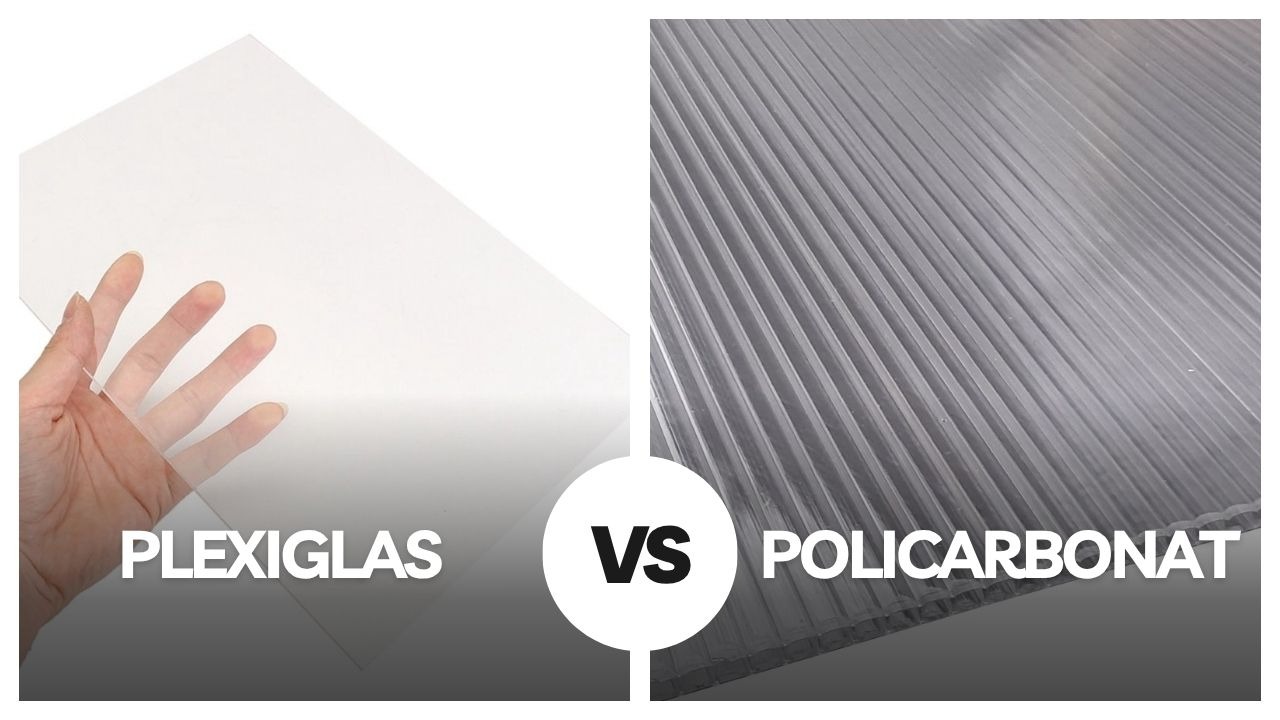
Plexiglass, meaning acrylic sheet, is the material chosen when excellent transparency, a clean appearance, and easy processing matter. Polycarbonate is the material chosen when high impact resistance, flexibility, and operational safety matter.
Both are transparent plastic materials used in construction, interior design, advertising, and industry, but each has a well-defined role. The correct choice is made based on the use case, not just on price or appearance.
Plexiglass transmits light very well and offers transparency close to glass. At the same time, acrylic sheets are lightweight, easy to cut and process, and maintain their appearance over time. This is why they are often used in shop windows, advertising panels, exhibition stands, decorative elements, or transparent dividers.
Polycarbonate is known for its very high impact resistance. It is used in areas where there is a risk of impact, hail, mechanical stress, or large temperature differences. In many technical and architectural projects, polycarbonate replaces glass due to its low weight and high resistance.
When we talk about plexiglass vs polycarbonate, we are actually comparing two good materials that are suited for different situations. If the choice is made correctly from the start, the material will last longer, look better, and will not require quick replacement.
Real differences in strength and long-term behavior
The biggest difference between the two materials is impact resistance. Polycarbonate is much more resistant to impact than plexiglass. For this reason, it is used for canopies, skylights, roofs, industrial protection panels, safety screens, or high-traffic areas.
Plexiglass is also resistant, much more resistant than regular glass, but being more rigid, it can crack if subjected to strong impact. On the other hand, it has a harder surface and resists fine scratches better, which makes it suitable for applications where appearance matters a lot.
Polycarbonate is more flexible and better withstands temperature variations, vibrations, and mechanical stress. This is why it is frequently used in construction, terrace enclosures, industrial halls, pergolas, greenhouses, or translucent facades.
In short, the choice is usually made like this:
- for impact resistance and safety, polycarbonate is chosen
- for very good transparency and aesthetic appearance, plexiglass is chosen
- for areas exposed to hail, wind, or shocks, polycarbonate is chosen
- for shop windows, panels, and interior design, plexiglass is chosen
We always discuss with the client where the material will be installed, because this is where the real difference between a good and an unsuitable choice is made.
Differences in transparency, weight, and processing
If we place the two materials side by side, plexiglass looks better from an optical point of view. It has excellent transparency and clarity close to glass. This is why it is preferred in advertising, displays, light panels, frames, transparent protection panels, or design elements.
Acrylic sheets also have the advantage of being easy to process. They can be cut, drilled, thermoformed, and polished without major difficulties. For custom projects or elements where finishing quality matters, this material is very suitable.
Polycarbonate also transmits light, but the focus is more on resistance than on perfect optical clarity. However, polycarbonate has other important advantages. It is lightweight, flexible, resistant to high temperatures, and highly impact resistant.
In our polycarbonate range there are several options, and the choice is made depending on the project:
- solid polycarbonate for transparency and high resistance
- multiwall polycarbonate for thermal insulation and diffused light
- corrugated or trapezoidal polycarbonate for roofs and industrial buildings
Each type has its role, and choosing correctly means longer lifespan and lower long-term costs.
Price differences and long-term cost
Many clients choose materials based only on the price per square meter, but in practice the most important factor is the long-term cost. Plexiglass is generally more affordable than polycarbonate and is a very good choice for interior applications, panels, shop windows, or decorative projects.
Polycarbonate may have a higher price, but its resistance compensates for the difference in many situations. If the material is installed in an area exposed to hail, wind, shocks, or extreme temperatures, polycarbonate will perform much better and will not need replacement.
When calculating correctly, you should consider:
- lifespan
- impact resistance
- installation cost
- fastening accessories
- processing losses
- replacement risk
Very often, the more resistant material also becomes the most cost-effective, because it remains functional for a longer time.
For design projects, advertising panels, stands, or dividers, an acrylic sheet is a very good choice. For roofs, skylights, terrace enclosures, greenhouses, or industrial applications, polycarbonate is the right choice.
At Pintaplast, we offer not only materials but also technical consultancy, cutting services, accessories, and complete installation solutions. Our experience shows that choosing the right material from the start makes the difference between a project that looks good only at the beginning and one that looks good for many years.
If we simplify the choice, the rule is this: plexiglass is for aesthetics and transparency. Polycarbonate is for resistance and safety. If the project combines both requirements, the decision is made based on the installation area and the stresses the material will be exposed to.
If you are not sure which material suits you, the best approach is to discuss the project. We can help you choose the right material, thickness, fastening system, and accessories so that the result is durable, safe, and looks good in the long term.