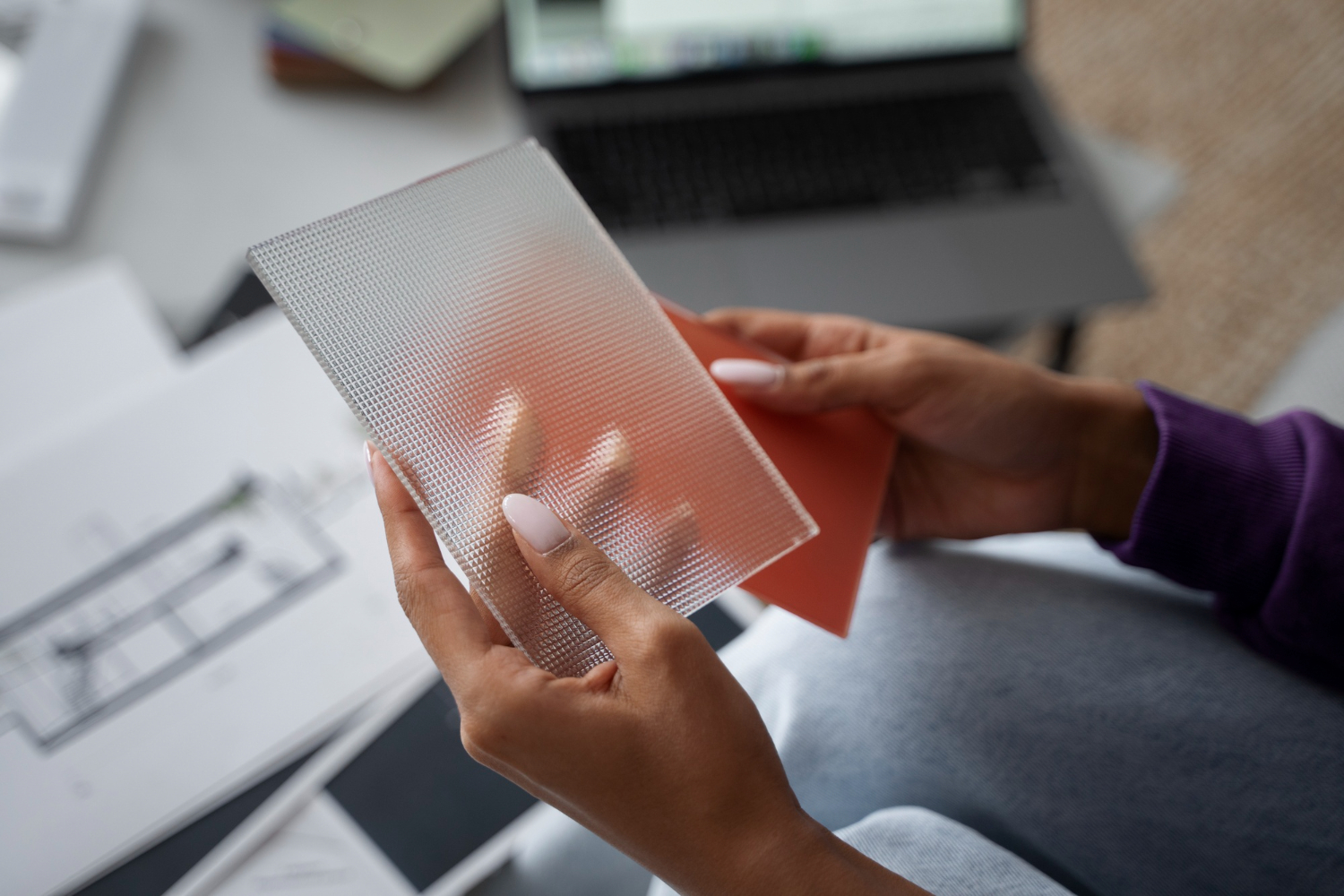
Plexiglass, also known as PMMA, is a transparent plastic material frequently used instead of glass when high light transmission, low weight, and a clean appearance are desired. It is a very clear acrylic sheet capable of transmitting up to 92% of natural light and maintaining its color over time. It does not yellow easily when exposed to sunlight and provides UV protection without additional treatments.
It can be easily cut, drilled, sanded, and polished, and through heating it can be shaped into various forms. In practice, it is used for advertising panels, displays, lightboxes, information panels, windows, space dividers, railings, and interior decorative elements.
Compared to glass, it is lighter and has better impact resistance, but it remains a rigid material. If installed incorrectly or subjected to excessive stress, it can crack. For this reason, choosing the right thickness and the correct mounting method are very important for durability. PMMA is recyclable and can be reused without issues.
In our range of acrylic sheets, there are options and sizes suitable for residential, commercial, and industrial projects, and technical consultancy is included to ensure the right choice.
How plexiglass is manufactured and what you should know before using it
Plexiglass is produced by transforming a liquid raw material into a transparent solid material through a polymerization process. From this material, sheets are produced which are then cut and protected with film until use.
On the market there are sheets produced by casting and sheets produced by extrusion. The difference between them mainly relates to how they behave during processing and the uniformity of their thickness.
In practice, what matters more is how you work with the sheet than the production method. Plexiglass can be cut with common tools, drilled, and polished to a very clean finish.
It is important to allow space for expansion and not to overtighten screws. A hole that is too small or a rigid fastening method can lead to cracks over time.
The main advantages of acrylic sheets are:
- they transmit natural light very well
- they are lightweight and easy to transport
- they have a hard surface that looks good after finishing
- they resist weather conditions and UV rays well
- they can be thermoformed and cold bent
- they are recyclable and have a long lifespan
At the same time, it should be noted that high rigidity also comes with a limitation. Plexiglass is not as flexible as other plastic materials and may chip under strong impact. For this reason, a proper evaluation of the environment where it will be installed is recommended.
Where plexiglass is used and what thicknesses are suitable
Plexiglass is widely used in advertising and signage because it offers clarity and a professional appearance. You see it in light panels, exhibition stands, channel letters, and information boards. It is a material that allows engraving, printing, and foil application without issues.
In interior design it is used for office dividers, reception protection panels, transparent shelves, or decorative ceilings. In construction it may be used for light balcony enclosures or translucent elements where high structural strength is not required. In all these situations, choosing the right thickness matters.
As general guidelines, without replacing a technical calculation:
- 2 or 3 mm sheets for light protection panels and signage
- 4 or 6 mm sheets for more rigid panels and dividers
- thicker sheets for large surfaces or areas where additional stability is required
Proper installation means elastic fastening systems, holes slightly larger than the screws, and avoiding stress in the material. These small details make the difference between a durable installation and one that requires repairs.
Plexiglass or polycarbonate and when to choose multiwall polycarbonate
Many clients start with plexiglass and then ask whether polycarbonate might be a better option. The answer depends on what happens to the sheet after installation.
If you want clarity, an elegant look, and easy processing, PMMA is a very good choice. If you need high impact resistance and increased safety, polycarbonate becomes the logical solution.
Polycarbonate is more flexible and can withstand strong impacts without breaking easily. It is suitable for protection panels, canopies, safety screens, or high-traffic areas.
For large coverings and spaces where thermal insulation also matters, multiwall polycarbonate sheets are used. These have a cellular structure that retains heat in winter and reduces overheating in summer.
A simple selection scheme helps a lot:
- plexiglass for transparency and clean design
- solid polycarbonate for impact resistance and safety
- multiwall polycarbonate for roofs, greenhouses, and skylights
At Pintaplast we do not just sell materials, we also provide technical support for making the right choice. We can cut the sheets to size, prepare the right accessories, and explain the installation steps. Our experience in residential and industrial projects allows us to quickly recommend the right solution for each situation.
Plexiglass is the right material when you want light, clarity, and an elegant look. Polycarbonate is the right choice when you want resistance and protection, while the multiwall option is suitable for coverings and insulation.
If you have a project planned and want the right solution from the start, our team offers consultancy, quality materials, and support until the project is completed.